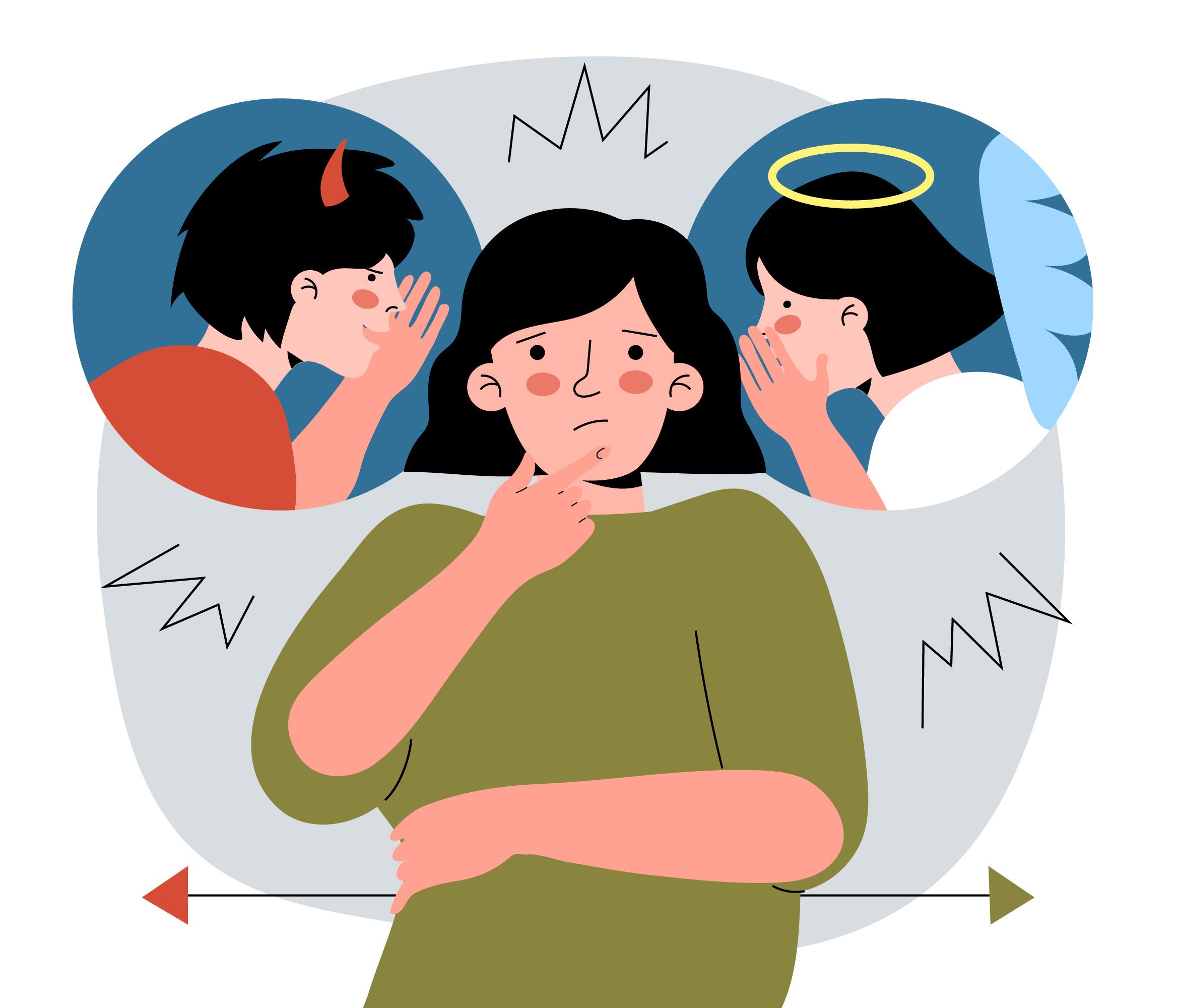
Ever met someone who’s way too confident for how little they actually know? Or maybe caught yourself feeling like an expert after watching just a couple of videos? Yeah, that’s not random that’s your brain playing tricks on you.
Welcome to the Dunning–Kruger effect, a psychological bias that quietly shapes how we see ourselves, often without us realizing it.
At its core, the Dunning–Kruger effect is simple but powerful:
- People with low ability or limited knowledge in a subject
- Tend to overestimate their competence
In the simplest terms: the less you know, the more confident you feel.
It’s not about arrogance, it’s about awareness. When you don’t know enough, you also lack the ability to recognize what you don’t know. And that’s where the illusion begins.
Origin of the Concept So where did this idea actually come from? Turns out, it didn’t start as just a theory, it came from a very real curiosity about human behavior. Back in 1999, two psychologists, David Dunning and Justin Kruger, decided to explore something interesting: how accurately people judge their own abilities. They ran a series of experiments where participants were tested on skills like logic, grammar, and humor. After completing the tasks, participants were asked to estimate how well they had performed. Here’s where things got surprising. Those who scored the lowest often believed they had done really well. Meanwhile, high performers tended to underestimate themselves slightly. This gap between actual performance and self-perception became the foundation of what we now call the Dunning–Kruger effect.
Why It Happens (Core Mechanism)
- Lack of Self-Awareness
- Metacognition Problem
- Illusion of Superiority
The Famous Curve
- Peak of “Mount Stupid” This is where the journey usually begins and honestly, it feels great. You learn something new, maybe watch a few videos, read a couple of articles, or try a skill for the first time, and suddenly everything clicks. It feels simple, clear, and totally manageable. That small burst of knowledge creates a big spike in confidence. You start thinking, “This isn’t that hard… I’ve got this.” But here’s the catch, you’ve only seen the surface. The deeper complexities are still hidden, so your brain assumes there’s nothing more to uncover. This is what people jokingly call the “Peak of Mount Stupid,” where confidence is at its highest, but actual understanding is still very limited. It’s not foolishness, it’s just the natural excitement of early learning, mixed with a lack of perspective.
- Valley of Despair Then comes the drop and it can feel rough. As you continue learning, you start encountering things that don’t make sense. Concepts get more complicated, mistakes become more obvious, and suddenly that early confidence begins to crack. You realize, “Wait… I don’t actually understand this as well as I thought.” This is the Valley of Despair. Confidence dips, sometimes sharply, because awareness finally kicks in. You begin to see the gaps in your knowledge, and it can feel overwhelming. Some people even give up at this stage, thinking they’re just not good enough. But in reality, this is progress. It’s the moment where illusion fades and real learning begins. You’re no longer guessing, you’re starting to see the bigger picture, even if it feels uncomfortable.
- Slope of Enlightenment If you push through that low point, something interesting starts to happen. Learning becomes more steady and grounded. Instead of chasing quick wins, you begin to build real understanding, step by step. Confidence slowly returns, but this time it’s different. It’s not loud or exaggerated; it’s quieter, more realistic. You start recognizing patterns, correcting your own mistakes, and actually knowing why something works instead of just assuming it does. This phase is often called the Slope of Enlightenment. Progress might feel slower here, but it’s far more meaningful. You’re connecting ideas, gaining experience, and developing a clearer sense of what you know and what you still need to learn. It’s a shift from illusion to insight.
Real-Life Examples
You don’t have to look far to see the Dunning–Kruger effect in action, it shows up in everyday situations more often than we realize.
- Education: A student who studies just a little might feel overly confident before an exam, believing they’ve mastered the subject. But when results come out, the gap between confidence and performance becomes clear.
- Workplace: An inexperienced employee may overestimate their abilities, taking on tasks they’re not fully prepared for. Without enough experience, they may not recognize their own limitations.
- Social Media: This effect is especially visible online, where people confidently share opinions or misinformation, often without deep understanding, yet sounding completely certain.
- Driving: Interestingly, many drivers believe they are “above average,” which statistically can’t be true for everyone, showing how easily confidence can outpace reality.
Beating the Dunning–Kruger effect isn’t about becoming less confident; it’s about becoming more accurately confident.
- Seek Feedback: One of the most effective ways to stay grounded is to invite honest feedback from others. Sometimes, we’re simply too close to our own work to see its flaws. By asking teachers, peers, or colleagues for genuine evaluation, you get an outside perspective that can highlight blind spots you might miss. It might feel uncomfortable at first, but that discomfort is often where growth begins.
- Keep Learning: The more you learn, the more your perspective expands. Continuous learning helps you move past surface-level understanding and see the deeper complexities of a subject. Over time, this naturally reduces overconfidence and replaces it with informed awareness.
- Practice Self-Reflection: Take a moment to question your own assumptions. Ask yourself: “Do I really understand this, or do I just think I do?” That small pause can make a big difference.
- Embrace Humility: Accepting that you don’t know everything isn’t weakness, it’s strength. It keeps you open, curious, and always improving.
The Dunning–Kruger effect may seem harmless at first, but its impact can be significant. When confidence outweighs competence, it often leads to poor decisions, choices made without fully understanding the consequences. In a world driven by fast information, it also fuels the spread of misinformation, where people share and trust ideas without proper knowledge. Perhaps most importantly, unchecked overconfidence can prevent growth, as individuals stop questioning themselves or seeking improvement. Recognizing this bias is the first step toward avoiding these risks. The goal isn’t to doubt yourself constantly, but to balance confidence with awareness, curiosity, and a willingness to keep learning.