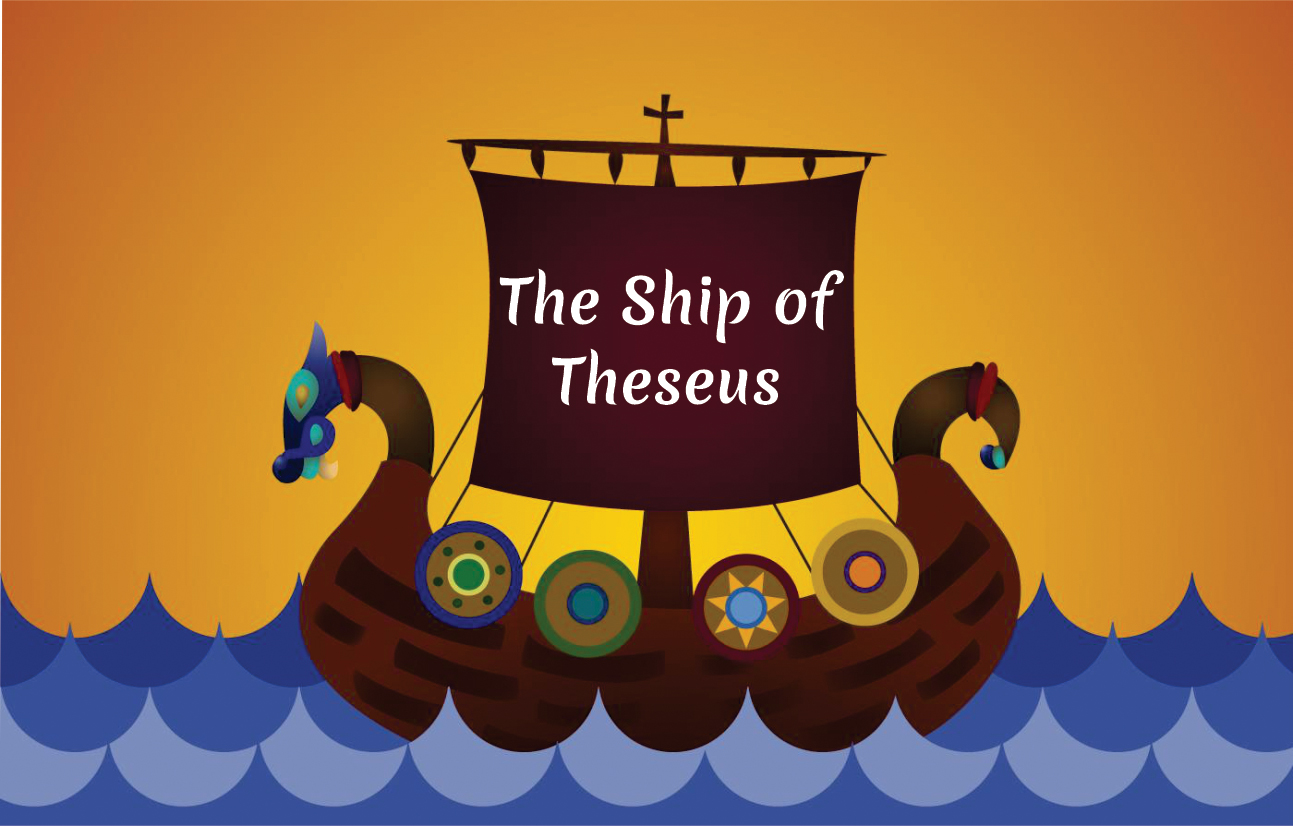
Have you ever looked at something and wondered if it is still the same after everything about it has changed? That is the core idea behind the Ship of Theseus, a classic thought experiment from ancient philosophy. It asks whether an object that has all its parts replaced over time can truly remain the same thing. This puzzle messes with identity, change, and how humans decide what makes something real in today’s modern life.
Background:
The Ship of Theseus did not start as some dusty classroom theory meant to put people to sleep. It actually comes from ancient Greece, where philosophers loved asking questions that made everyone pause and overthink life. The idea is linked to Theseus, a legendary hero whose ship was preserved for years after his adventures. As parts of the ship slowly wore out, they were replaced one by one to keep it sailing. Over time, every original piece was gone. That is when people started arguing. Was it still Theseus’s ship or just a really convincing copy? Philosophers like Plutarch used this story to spark debates about identity, change, and what makes something authentic. Even though it is centuries old, the question still hits hard today because humans are still obsessed with labels, originality, and holding onto the past while everything keeps changing around us.
Why this topic matters now:
The Ship of Theseus matters now because we are living in an era of nonstop change, and humans are struggling to keep up with what that change means. We replace things faster than ever before, ideas, systems, values, even versions of ourselves. Yet we still crave stability and clear identities. This paradox sits right at the heart of the Ship of Theseus.
Today, society is obsessed with continuity. We want things to evolve without losing their essence. Whether it is institutions, cultures, or personal identities, we expect change to be smooth and harmless. But the Ship of Theseus forces us to confront an uncomfortable truth. Change is not always clean, and identity is not always fixed. Sometimes, it is blurry, layered, and uncertain.
This topic also matters because it challenges how we define authenticity. In a world driven by updates, edits, and reinvention, the idea of an “original” is slowly fading. The Ship of Theseus questions whether originality even matters, or if meaning comes from persistence and memory instead. That question feels especially relevant now, when people constantly debate what is real, what is copied, and what is still true.
Most importantly, this thought experiment encourages deeper thinking. It pushes people to slow down and question assumptions they usually accept without hesitation. In a fast-paced world that rewards quick answers, the Ship of Theseus reminds us that some questions are powerful precisely because they do not have simple solutions.
When Everything Changes, What Still Remains?
- The idea of continuity
- The name and the narrative
- Purpose over parts
- Collective agreement
- Memory as an anchor
- Emotional attachment
- Values and core principles
- The illusion of permanence
- The question itself
Applications of the Ship of Theseus in Today’s World
The Ship of Theseus shows up everywhere once you start paying attention. It is no longer locked in philosophy books. It plays out daily in how we work, build, update, and reinvent things around us. Modern life is basically one long Theseus experiment.
Take companies first. A startup might begin with five people and a bold idea, but as it grows, everything changes. New employees replace old ones, leadership shifts, goals evolve, and company culture gets rewritten. Even the brand voice changes. Still, the company presents itself as the same entity to the world. Investors, customers, and employees are expected to believe in continuity, even when the internal reality feels completely different. This is the Ship of Theseus in action, applied to corporate identity.

Leadership changes push this even further. When a new leader takes charge, strategies flip, priorities change, and decision making feels unfamiliar. Employees often say the company is “not what it used to be,” even though nothing official has changed on paper. The name, logo, and mission statement stay intact, but the experience feels altered. That gap between structure and identity is exactly what the thought experiment highlights.
Products and technology offer another clear example. Apps, devices, and platforms update constantly. Features are added, removed, or redesigned to stay competitive. Sometimes users love it, sometimes they hate it. When people say a product has lost its essence, they are reacting to identity, not functionality. Even if it performs better, it may not feel like the same thing anymore.
On a personal level, the Ship of Theseus applies to human identity. People switch careers, change belief systems, heal from trauma, and outgrow older versions of themselves. Almost every internal part changes over time, yet we still say, “this is who I am.” This theory helps explain why personal growth can feel both empowering and confusing at the same time.
Teams, communities, and even cultures follow the same pattern. Members rotate, values shift, and norms evolve, yet the collective identity remains. The Ship of Theseus helps us understand that identity in the modern world is not about staying unchanged, but about learning how to carry meaning through constant transformation.
Conclusion:
In the end, the Ship of Theseus is less about finding a right answer and more about learning how to sit with change. It reminds us that identity is not always tied to physical parts, fixed roles, or original versions. In a world where everything evolves quickly, this experiment helps us understand why change can feel unsettling yet necessary. Whether it is a company, a product, or a person, the Ship of Theseus shows that continuity often lives in purpose, memory, and meaning. Sometimes, staying the same does not mean resisting change, but learning how to move through it.