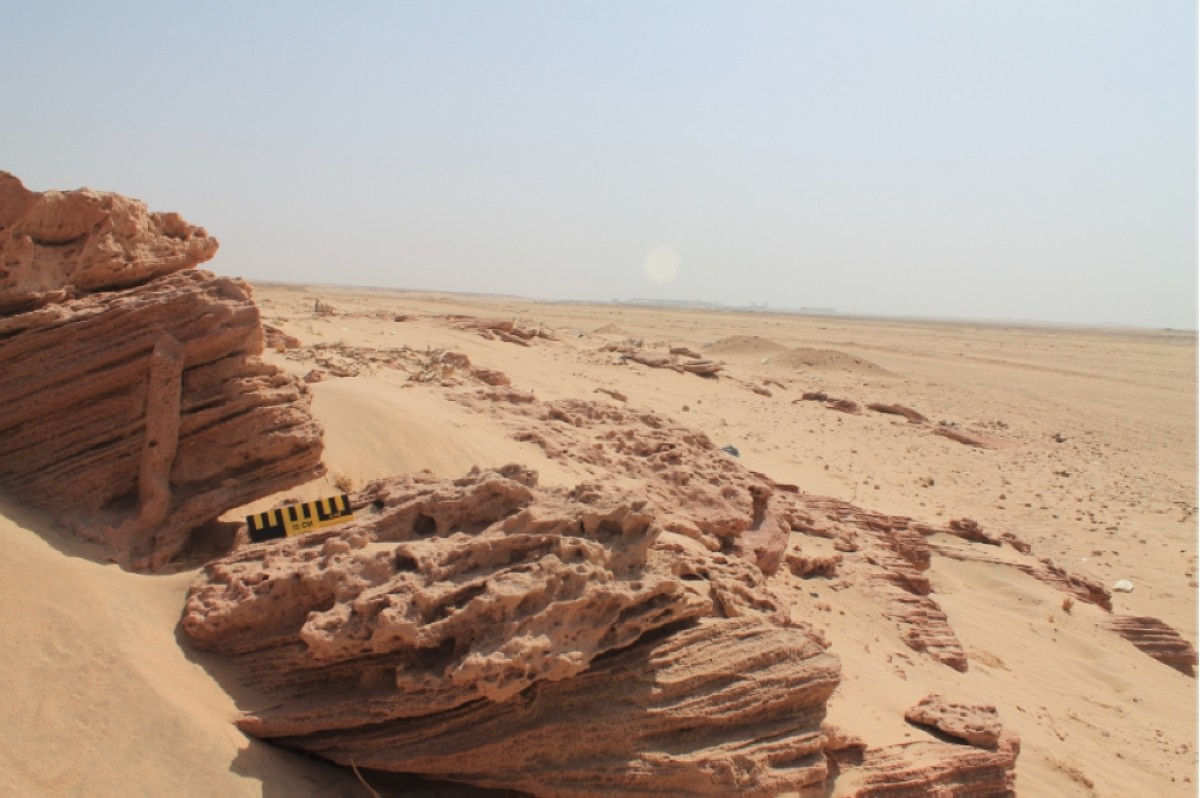
Kuwait has launched its first Geological Park, a public, educational and eco-tourism initiative aimed at showcasing the country’s rock formations, desert landscapes and natural heritage while supporting research, schools and sustainable tourism.
What is the GeoPark and why is Kuwait launching it?
Set to fully open by December 2025, Kuwait’s GeoPark marks the country’s entry into environmental and scientific tourism. The project is built around three pillars—education, research and eco-tourism—and is envisioned as a national hub for understanding Kuwait’s geological past.
The park’s pilot site is planned in Al-Subbiya, with a main location identified north of Kuwait Bay, less than an hour from Kuwait City. Designed as a protected area featuring Kuwait’s most distinctive landforms, the GeoPark will function as both an open-air laboratory and a family-friendly visitor destination. Outdoor trails, interactive exhibits, interpretive signage and a dedicated visitor centre will explain Kuwait’s Earth history, biodiversity and desert ecology.
The initiative is supported by the government and led by the Kuwait Oil Company (KOC), signalling a broader national push toward environmental stewardship and economic diversification.
What will Kuwait’s Geological Park offer?
The GeoPark will take visitors through millions of years of geological evolution via curated exhibits highlighting rock formations, fossil sites and a dramatic “geological timeline wall” charting Kuwait’s history from ancient eras to the present.
Features include:
- An Interactive Mineral Garden where visitors can handle native minerals
- Educational trails, guided walks and earth-science workshops
- Displays of striking sand injectite formations, reddish geological structures compared by experts to Martian landscapes
- Archaeological sites linked to Neolithic settlements and the Ubaid civilization, dating back more than 10,000 years
Path toward UNESCO recognition
The GeoPark is a key element of New Kuwait 2035, the country’s long-term development vision. Kuwait aims to secure a place for the park within the UNESCO Global Geoparks Network, which recognises regions of outstanding geological value that integrate conservation, education and sustainable development.
The project will roll out in two phases:
- Phase 1 (Rapid Plan): Development of a 20 sq km visitor-ready zone
- Phase 2 (Long-Term Expansion): Enlargement to 1,000 sq km, including large-scale ecological restoration and planting of more than 300 native species such as ghaf and acacia
Ticket prices and visitor timings will be announced closer to opening. For now, anticipation is high as the GeoPark emerges as one of Kuwait’s most promising new public attractions.