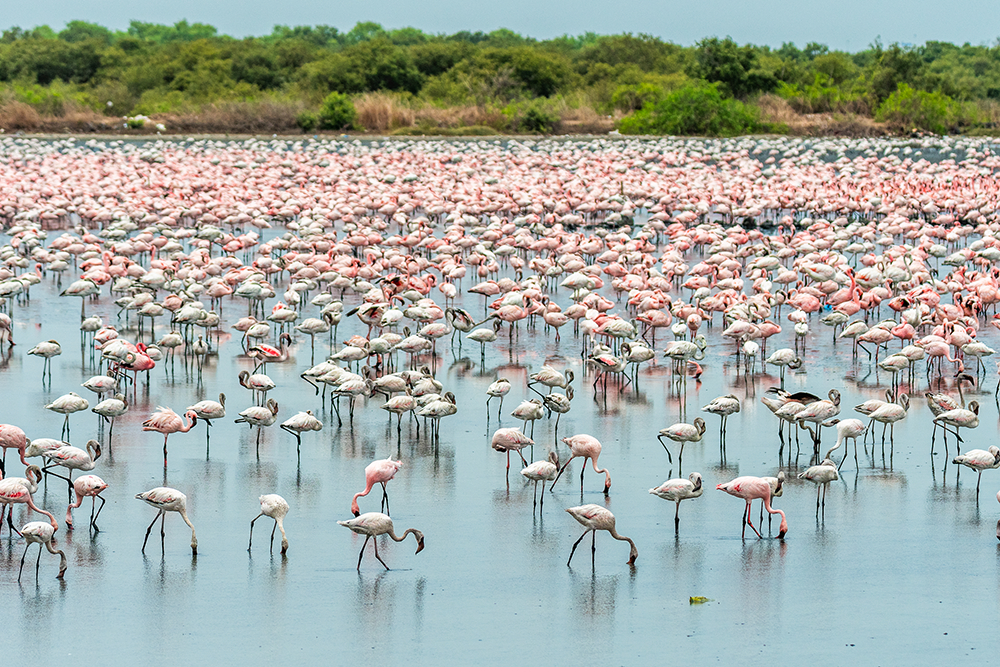
Environmental activists have declared a “wetland emergency” in Navi Mumbai after water tests revealed that three major flamingo habitats have turned toxic.
The affected sites—DPS Lake, NRI Lake, and T S Chanakya Lake in Nerul—act as satellite wetlands for the Thane Creek Flamingo Sanctuary (TCFS), a designated Ramsar site known for attracting migratory flamingos.
Flamingo season in the region typically runs from November to May, with peak sightings between January and March, when birdwatchers gather to witness large flocks. However, activists say flamingos have not arrived this season, raising serious concerns about habitat degradation.
Water samples tested at the request of the NatConnect Foundation point to severe ecological stress. The findings were shared with Prime Minister Narendra Modi and Maharashtra Chief Minister Devendra Fadnavis.
According to B N Kumar, director of NatConnect, four key indicators—total dissolved solids (TDS), pH levels, biological oxygen demand (BOD), and chemical oxygen demand (COD)—show that the wetlands are no longer functioning as healthy tidal systems. Instead of regular flushing, the water has become stagnant and overly concentrated, suggesting blocked or restricted tidal flow.
Activists say this has transformed the wetlands into polluted basins, incapable of sustaining the delicate ecological balance needed for flamingos. These birds rely on algae and microorganisms that flourish only in stable water conditions. As pollution rises, the food chain collapses, making the habitat unviable.
Blame has been directed at authorities, particularly the City and Industrial Development Corporation, which activists accuse of neglect and unchecked urban development. They also allege that regulators like the Maharashtra Coastal Zone Management Authority and the forest department have failed to intervene.
Environmentalists warn that the disappearance of flamingos may signal a tipping point. While the birds have adapted to degraded environments before, their absence now suggests the ecosystem may have crossed a critical threshold.
Calling the wetlands a “public asset under threat,” activists have urged immediate government action, warning that continued neglect could harm biodiversity, groundwater, and overall environmental health.