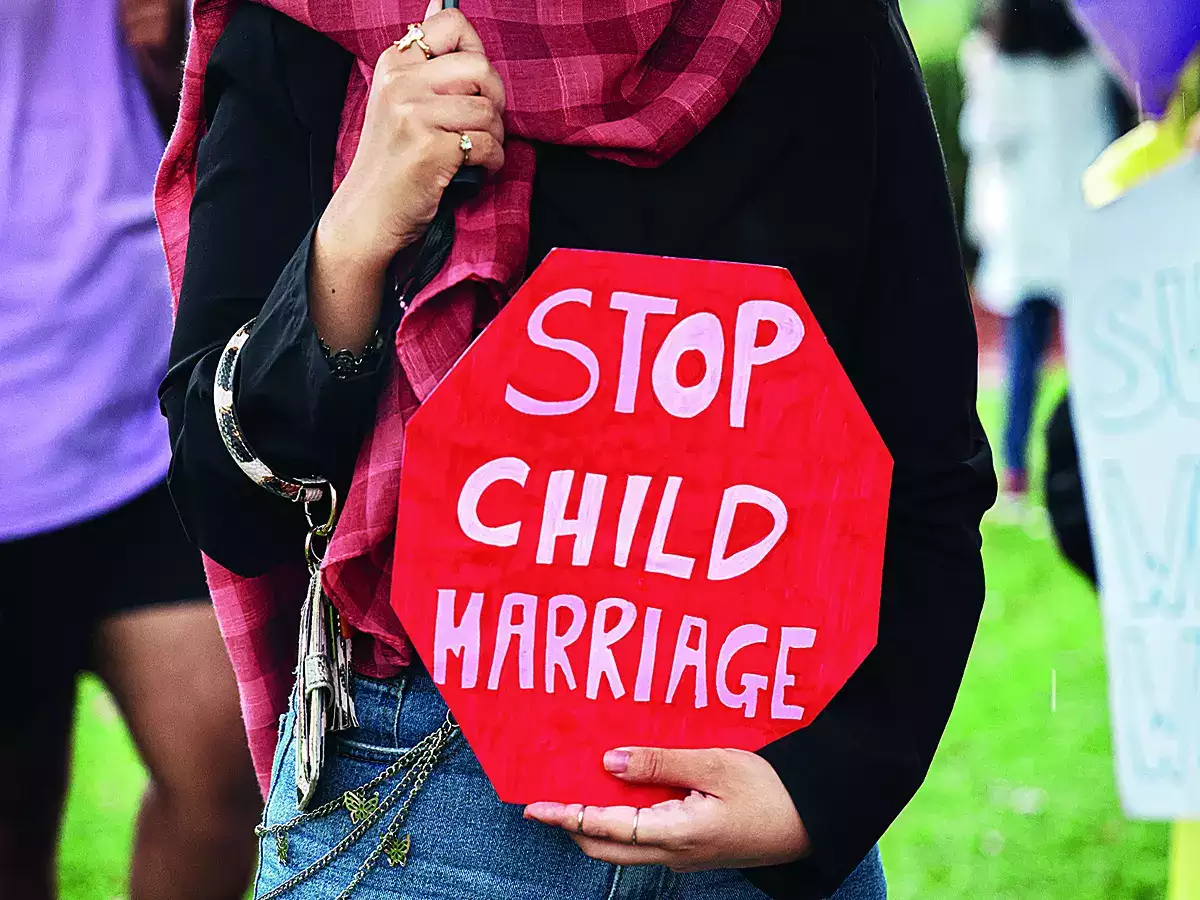
NEW DELHI: A new report highlights poverty as the most significant factor driving child marriage, with 91% of respondents citing poor financial conditions as a major cause. The report also notes a decline in child marriage cases at the village level over the past three years.
The survey covered 757 villages across 15 districts in Bihar, Rajasthan, Assam, Karnataka, and Maharashtra. Of these, 707 villages reported instances of child marriage. The villages were randomly selected from the database of Just Rights for Children, an NGO focused on child rights issues.
The survey, which involved interviews with 1,042 respondents—including members of panchayati raj institutions, school teachers, anganwadi workers, and NGO staff—was prepared by the Centre for Legal Action and Behavioural Change for Children and released during a side event at the UN General Assembly in New York.
The report also revealed a steady decline in the number of child marriage cases over the past two years. The number of girls married before the age of 18 dropped from 3,861 in 2022-23 to 2,379 in 2023-24, and further to 1,195 in 2024-25. Similarly, the number of boys married before the age of 21 also fell from 2,040 in 2022-23 to 1,152 in 2023-24, and to 568 in 2024-25.
While poverty was identified as the leading cause, the report also linked child marriage to other factors: 44% of respondents viewed it as a means of "protection" for girls, while 28% associated it with notions of "purity" or "virginity." Other contributing factors included limited parental awareness or intellectual maturity (28%), inadequate educational opportunities for girls (27%), restricted career prospects (21%), securing a good marriage match (33%), cultural and traditional practices (20%), controlling sexual behavior and addressing premarital pregnancy (15%), and seeing girls as a financial burden (15%).
Nearly all respondents identified awareness campaigns and compulsory education as the most effective interventions to prevent child marriage. Bhuwan Ribhu, founder of Just Rights for Children, expressed optimism, stating, "India is on the brink of ending child marriage and proving to the world that it’s both possible and inevitable. The formula is clear: prevention before protection, protection before prosecution, and prosecution to create deterrence for prevention."