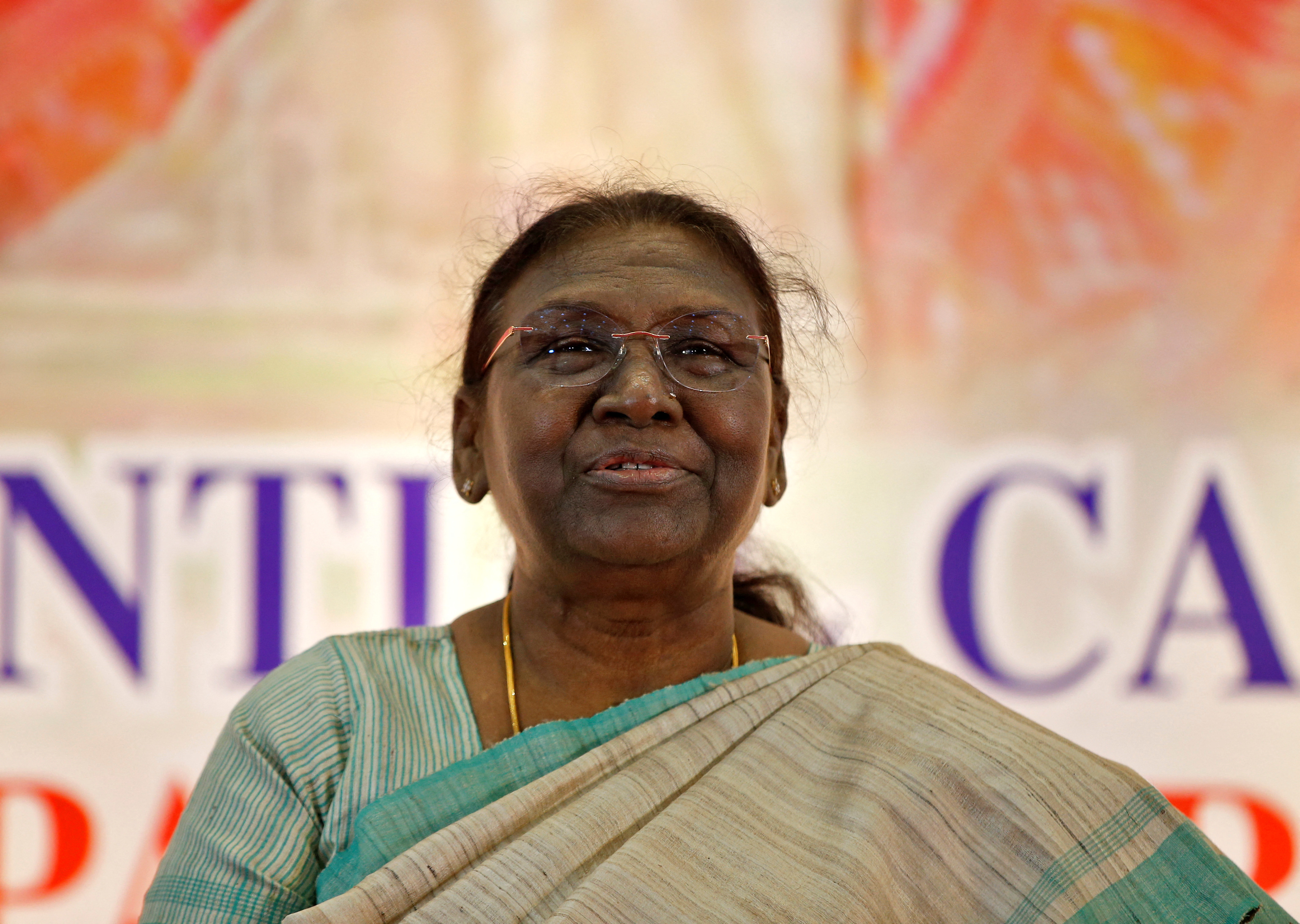
New Delhi: Against the backdrop of frequent disruptions in Parliament amid acrimony between the government and the opposition, President Droupadi Murmu on Wednesday called for unity across party lines, saying issues of national interest must transcend political differences.
Addressing a joint sitting of the Lok Sabha and Rajya Sabha at the start of the Budget session, the President said matters such as national security and the collective resolve to build a ‘Viksit Bharat’ should be beyond debate, urging Members of Parliament to speak in one voice on issues vital to the nation.
Invoking leaders from across the ideological spectrum—including Jawaharlal Nehru and Atal Bihari Vajpayee—Murmu said they exemplified the spirit of setting aside differences in the national interest. She also referred to Mahatma Gandhi, Ram Manohar Lohia, Sardar Vallabhbhai Patel and Deen Dayal Upadhyay to underline the idea that nothing is bigger than the nation, despite differing viewpoints.
She said Parliament should be unanimous on issues such as ‘Viksit Bharat’, national security, self-reliance and swadeshi. However, her praise for the VB-G RAM G law, which replaces MGNREGA and, according to the government, aims to curb corruption and accelerate rural development, triggered protests from opposition members demanding its rollback, while BJP members and allies applauded the move.
Opposition members were also heard protesting at the beginning of the address, prompting Parliamentary Affairs Minister Kiren Rijiju to later accuse them of disrespecting revered leaders mentioned by the President. The Congress rejected the charge, saying it was only seeking the restoration of MGNREGA.
With the opposition pushing for renewed debate on SIR and the VB-G RAM G law and the government ruling it out, another confrontation in Parliament appears likely.
In her address, which is prepared by the government, Murmu praised the administration’s handling of national security challenges, citing Operation Sindoor against Pakistan-linked terrorism and decisive action against Maoist extremism. She said Maoist violence, which once affected 126 districts, has now been confined to eight.
“India has shown that power can be exercised with responsibility and wisdom. Any terrorist attack on the country will be met with a firm and decisive response,” she said. Murmu also highlighted efforts to uplift backward communities and said India has remained the world’s fastest-growing major economy despite global challenges.
Prime Minister Narendra Modi described the address as inspiring and comprehensive, saying it captured India’s recent development journey and reaffirmed the shared goal of building a strong, self-reliant nation. He said the emphasis on farmers, youth, the poor and the marginalised reflected the government’s reform agenda, innovation focus and commitment to good governance.
The President also referred to the free trade agreement signed with the European Union, saying it would boost manufacturing and services and create new employment opportunities for the youth.