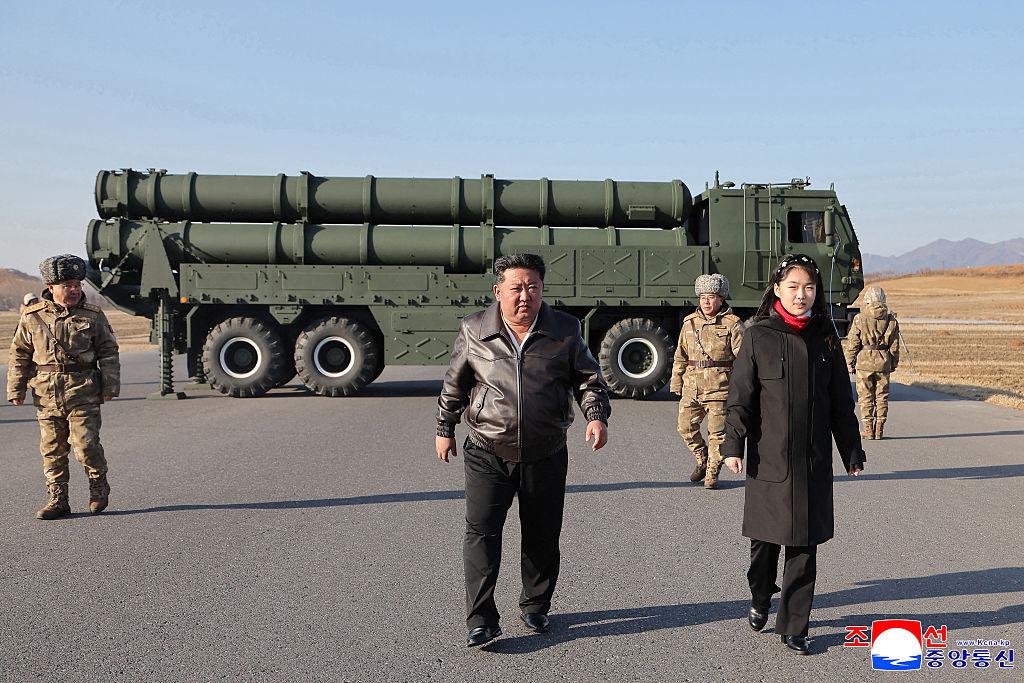
For most of the world, North Korea remains one of the most opaque political systems. Apart from missile launches, large military parades and carefully curated images released by state media, the inner workings of the ruling elite in Pyongyang are largely hidden from public view.
Occasionally, however, a single image sparks speculation about the country’s future leadership.
On New Year’s Day 2026, during a ceremony at the Kumsusan Palace of the Sun, North Korean leader Kim Jong Un paid tribute to his father and grandfather. Standing beside him was a young girl—his daughter, Kim Ju Ae.
Her prominent placement beside the country’s leader immediately drew attention.
The Rise of Kim Ju Ae
Kim Ju Ae was first introduced to the public in November 2022, when she appeared alongside her father at a long-range missile launch. Wearing a white jacket and holding Kim Jong Un’s hand, she stood in front of an intercontinental ballistic missile—an unusually symbolic setting.
Since then, her appearances have steadily expanded. She has attended:
- Missile tests
- Major military parades
- Defence-related factory visits
- Key state ceremonies
In a political system where public visibility is tightly controlled, such appearances rarely happen by chance.
The Sacred “Paektu Bloodline”
Succession in North Korea does not follow elections or conventional political processes. Instead, legitimacy flows through the “Paektu Bloodline.”
This concept refers to the ruling family descending from Kim Il Sung, the country’s first leader. The term comes from Mount Paektu, which state propaganda portrays as the birthplace of the Korean revolution.
Leadership has passed through the family for three generations:
- Kim Il Sung
- Kim Jong Il
- Kim Jong Un
The Role of Kim Yo Jong
Another key figure in the succession discussion is Kim Yo Jong, the North Korean leader’s younger sister.
Over the past decade she has emerged as one of the regime’s most powerful officials. She frequently issues statements attacking foreign governments, particularly South Korea, and has played a central role in the regime’s messaging.
Many analysts believe that if Kim Ju Ae were designated successor while still young, Kim Yo Jong could act as a regent or power broker overseeing the government.
However, whether she would willingly step aside for her niece remains an open question.
Health Concerns Around Kim Jong Un
Another factor driving succession speculation is Kim Jong Un’s health.
At around 42 years old, the North Korean leader has been reported by foreign intelligence agencies to suffer from obesity, diabetes and high blood pressure—conditions that also affected his father and grandfather.
Both previous leaders died relatively young:
- Kim Il Sung at 82
- Kim Jong Il at 69
Introducing Kim Ju Ae early could help establish her legitimacy while he is still firmly in power.
Economic Pressures on the Regime
Behind the carefully managed public image, North Korea faces significant economic challenges.
International sanctions tied to its nuclear and missile programmes have severely limited trade and foreign investment. The country relies heavily on China as its primary economic partner.
Meanwhile:
- Military spending is believed to consume over a quarter of the country’s economic output
- Many citizens depend on informal markets known as Jangmadang for basic goods
An Uncertain Future
So far, there has been no official announcement regarding succession.
Yet Kim Ju Ae’s growing presence in state imagery has changed the conversation about North Korea’s future leadership. In a system where symbolism is rarely accidental, her appearance beside the country’s supreme leader may signal a carefully planned political message.
Whether she ultimately becomes North Korea’s first female supreme leader—or whether other members of the ruling family assert their influence—remains uncertain.
What is clear is that the next chapter of the Paektu dynasty may already be quietly taking shape.