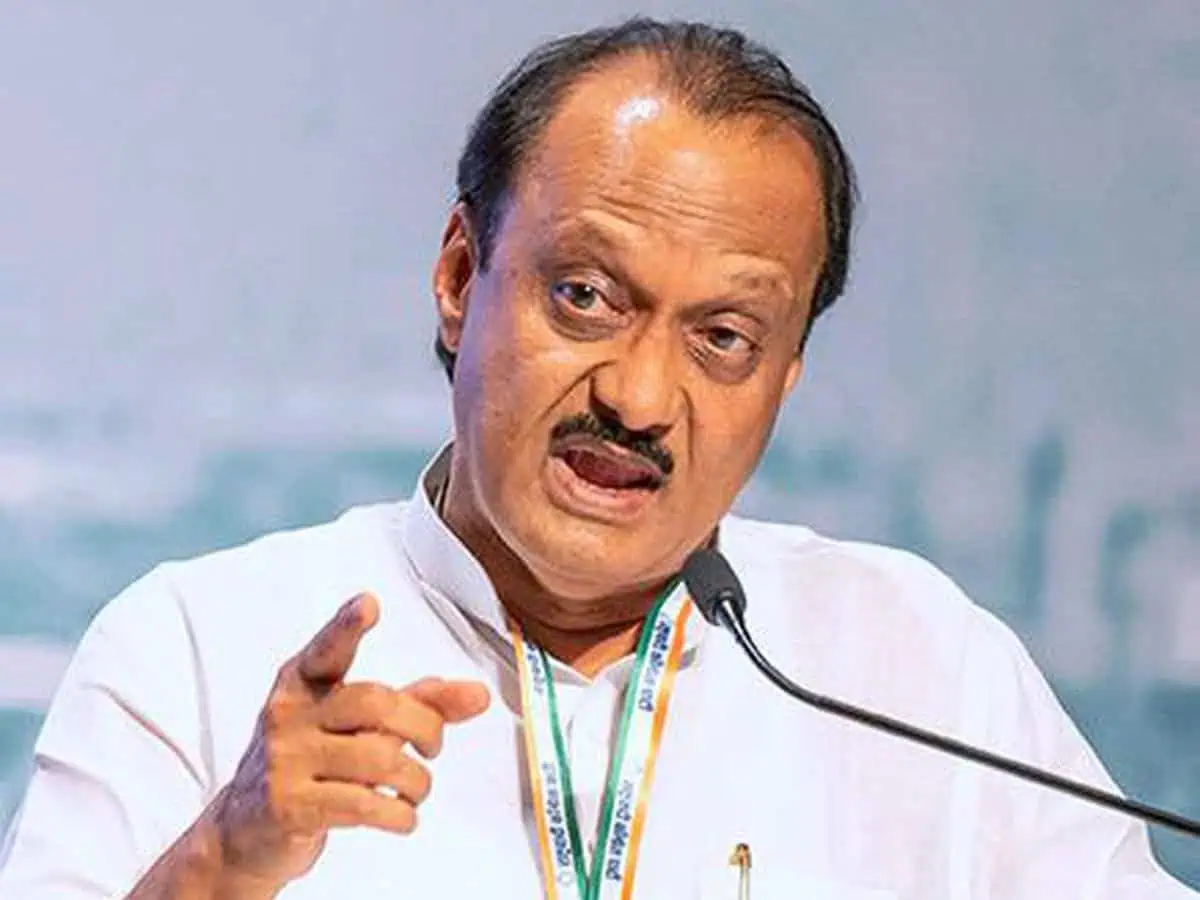
PUNE: Ajit Pawar was among the rare politicians who commanded respect and a measure of fear. He was not easily adored, but once he earned people’s regard, he secured a lasting place in their esteem. His career was often shadowed by controversy, yet he possessed the political acumen to navigate every crisis and return to the centre of power, regardless of electoral highs and lows.
Born in 1959 into the influential Pawar family, Ajit grew up under the towering presence of his uncle, Sharad Pawar, already a mass leader when Ajit was still learning the grammar of politics. Where Sharad Pawar connected instinctively with crowds, Ajit mastered the machinery behind them. He understood numbers, networks and the mechanics of governance. This grassroots networking, especially in the family bastion of Baramati, helped him remain unbeaten in every election he contested.
His career, however, was repeatedly interrupted by allegations — irrigation scams, cooperative bank issues, land deals, and the infamous “urinate in the dam” remark that damaged his public image. Each controversy bruised him, but none proved fatal.
Despite serving six terms as deputy chief minister and controlling some of the state’s most powerful departments, Ajit Pawar never crossed the final threshold. The chief minister’s chair remained his unfulfilled ambition.
Supporters often said he still had time on his side and had only recently begun to emerge from his uncle’s shadow before his journey was cut short. “I harboured the ambition of becoming CM, but the yog (auspicious moment) has not come yet,” he once admitted.
Ajit Pawar did not complete his commerce degree. “When I fill the election form, I never identify myself as a graduate,” he said. Yet he became a master of Maharashtra’s politics. His early grooming came through the cooperative movement — the backbone of western Maharashtra’s power structure. Sugar factories, district banks and irrigation bodies were not just institutions, but centres of influence. Long before he held major ministerial posts, he had built a formidable base among farmers, cooperative leaders and local strongmen.
Baramati became more than a constituency; it became a fortress. As his responsibilities across the state grew, his wife and sons nurtured the constituency and campaigned tirelessly. Often, all Ajit needed to do was address the final rally in Baramati to seal the result.
His electoral debut came in 1991, when he won the Baramati Lok Sabha seat by a record margin of over 3.36 lakh votes — among the largest in the country at the time. In a move reflecting both loyalty and calculation, he resigned to allow Sharad Pawar to return to Parliament. Later that year, he won the Baramati assembly seat, which he retained for eight consecutive terms until 2024, frequently with margins exceeding one lakh.
In the 2004 assembly elections, the NCP emerged as the single largest party with 71 seats, while ally Congress won 69. Yet the NCP ceded the chief minister’s post and instead claimed key portfolios — a decision Ajit Pawar later regarded as a “missed chance” to claim the top job.
Over the next decade, he handled crucial departments such as irrigation and rural development, which shape Maharashtra’s agrarian economy. He lived up to his reputation for speed. “I don’t like pending files on my table,” he often said.
In 2012, a report alleged irregularities worth nearly ₹70,000 crore in irrigation projects. Ajit Pawar, then holding the finance and planning portfolios, resigned under pressure. Weeks later, he was reinstated after official explanations and panel findings attributed most lapses to bureaucratic procedures.
The same period brought the most damaging moment of his public life. During a drought protest in 2013, he made an off-the-cuff remark suggesting that urinating into a dam would not fill it. The comment triggered outrage and became shorthand for political insensitivity. Though he apologised and later called it his biggest mistake, the damage lingered.
Another turning point came in November 2019, when, in a dramatic early-morning development, he aligned briefly with the BJP and was sworn in as deputy chief minister in Devendra Fadnavis’s government. The government collapsed within 80 hours, but the episode revealed his willingness to take political risks. He returned as deputy CM a month later in the Maha Vikas Aghadi government and served as finance minister from 2019 to 2022. In July 2023, he led a vertical split in the NCP, joined the BJP–Shiv Sena government and again became deputy CM, handling finance and energy, while continuing to invoke the Shahu–Phule–Ambedkar ideological legacy.
Beyond politics, Ajit Pawar left a mark on sport. As president of the Maharashtra Olympic Association — a post he held for several terms and recently regained — he worked not as a figurehead but as a coordinator, bringing together federations and pushing for structured development. His stewardship of the Maharashtra State Kabaddi Association reflected his deep understanding of rural Maharashtra, where sport and livelihood often intersect. He supported professional pathways without weakening grassroots systems and ensured attention extended beyond mainstream games to disciplines such as kho kho and cycling.
Ajit Pawar shared an unusual ease with party workers. He remembered names, enquired about families and spoke with familiarity during visits. His speeches were marked by sharp, rustic humour that drew laughter and large crowds.
Known for his punctuality, he expected the same from officials. In 2023, after he joined hands with the BJP–Shiv Sena, Devendra Fadnavis quipped that their “triple-engine government” would function 24/7: “Ajit Pawar will work in the morning since he is an early riser. I am on duty from noon to midnight, and throughout the night… you all know who,” he said, referring to Eknath Shinde, known as a night owl. Ajit Pawar also rebranded himself as the ‘dada’ of Maharashtra, adopting pink jackets and turbans to distinguish himself from the saffron of his allies.
He leaves behind a complex legacy. He shaped governments, controlled budgets, altered alliances and influenced the course of Maharashtra’s politics for more than four decades. Politics tested him through victories, defeats and controversies — but in the end, destiny brought the curtain down in an instant.